Fujifilm X-T1 (X-Trans II) Film Simulation Recipe: Kodacolor 200

Pumpkin – Farmington, UT – Fujifilm X-T1 – “Kodacolor 200”

For this recipe, I was attempting to recreate a Kodak Portra 400 NC aesthetic. A couple of decades ago, Portra (both the ISO 160 and ISO 400 emulsions) came in two versions: NC (“Neutral Color”) and VC (“Vivid Color”). Kodak later revised the film to be something in-between the two, which they simply called Portra 160 and Portra 400. This recipe is, I believe, in the general ballpark of Portra 400 NC, but not exactly right; however, I like the results anyway. So if this recipe is close to Kodak Portra 400 NC, why did I call it Kodacolor 200? Because I think it is actually a little closer to Kodacolor 200, which is a variety of Kodacolor VR, and related to ColorPlus 200. I wouldn’t call it an exact match to Kodacolor 200, but that’s the film this is most likely closest to. If you want a Portra 400 NC or Kodacolor 200 aesthetic, this recipe is relatively similar to both.

There’s a fair amount of contrast produced by this recipe, which looks really good in conditions without harsh light. In bright daylight, the contrast might be a little too much, perhaps more closely resembling push-processed film, or (to a lessor extent) even bleach-bypassed Portra. On bright days, you might consider dropping both Shadow and Highlight to +1 if you find it to be too contrasty. I believe this film simulation recipe produces its best results when the sun is a little obscured, but not heavy overcast; however, it’s possible to get good results in many different circumstances. If your X-Trans II camera has Classic Chrome, I invite you to give this recipe a try—it’s a great high-contrast, low saturation option.

Power Pole Cup – Farmington, UT – Fujifilm X-T1 – “Kodacolor 200”

Classic Chrome
Dynamic Range: DR200
Highlight: +2 (Hard)
Shadow: +2 (Hard)
Color: -2 (Low)
Sharpness: -1 (Medium-Soft)
Noise Reduction: -2 (Low)
White Balance: 3200K, +8 Red & -8 Blue
ISO: Auto up to ISO 3200

Exposure Compensation: 0 to +2/3 (typically)

Example photographs, all camera-made JPEGs captured on my Fujifilm X-T1 using this Kodacolor 200 film simulation recipe:

Phragmites – Farmington, UT – Fujifilm X-T1
Touch of Red – Salt Lake City, UT – Fujifilm X-T1
Pumpkin Stem – Farmington, UT – Fujifilm X-T1
Autumn Shrub – Farmington, UT – Fujifilm X-T1
Ground Leaves – Farmington, UT – Fujifilm X-T1
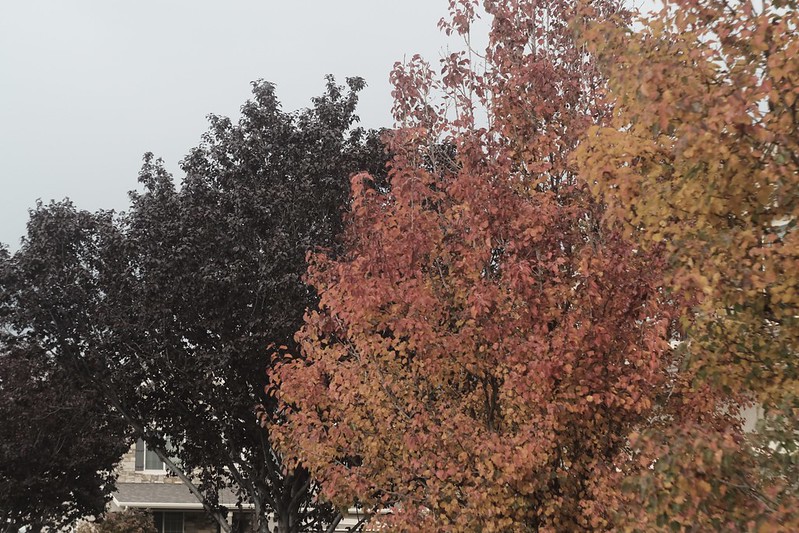
Neighborhood Autumn Tree – Farmington, UT – Fujifilm X-T1
Creek Path in Autumn – Farmington, UT – Fujifilm X-T1
Narrow Path – Farmington, UT – Fujifilm X-T1
Old Mile Post – Farmington, UT – Fujifilm X-T1
Delicate Fibers – Farmington, UT – Fujifilm X-T1

Find this film simulation recipe and many more on the Fuji X Weekly — Film Recipes App!

Help Fuji X Weekly

Nobody pays me to write the content found on fujixweekly.com. There’s a real cost to operating and maintaining this site, not to mention all the time that I pour into it. If you appreciated this article, please consider making a one-time gift contribution. Thank you!

$2.00

Top Articles of October (Plus Some You Might Have Missed)

It’s now November, and tricks or treats are officially over. I thought it would be fun to look back at October, and see what the most viewed articles were. I have two categories: most viewed in October and most viewed that were published in October. It’s a subtle difference, but a difference nonetheless. I’ll finish up with a third category: pointing out some posts that seem to have been overlooked—maybe you missed them.

Top 5 Most Viewed Articles During October

1. Of Shadow & Light — Be The Light
2. How To Add Film Simulation Recipes To Your Camera
3. My Fujifilm X100V Kodachrome 64 Film Simulation Recipe
4. History & Poetry of Kodachrome
5. My Fujifilm X100F Vintage Kodachrome Film Simulation Recipe

Top 5 Most Viewed Articles Published in October

1. Of Shadow & Light — Be The Light
2. History & Poetry of Kodachrome
3. Fujicolor X100V (X-Trans IV) Film Simulation Recipe: Pulled Fujicolor Superia
4. No Edit Photography: 7 Tips To Get The Film Look From Your Digital Photos
5. Fujifilm X-E4 (X-Trans IV) Film Simulation Recipe: Muted Color

Top 5 Most Overlooked Articles Published in October

1. Why Should You Become A Fuji X Weekly App Patron?
2. SOOC Episode 04: Kodacolor
3. New Patron Early-Access Film Simulation Recipe: Pushed CineStill 800T (X100V & X-Pro3)
4. New Patron Early-Access Film Simulation Recipe: Pushed CineStill 800T
5. Fujifilm X-Trans IV Film Simulation Recipe: Elite Chrome 200*

*Note: this article was published on October 31, so it’s inclusion in the “overlooked” category is a bit unfair.

Bonus:

Top 5 Film Simulation Recipes Published in October:

1. Pulled Fujicolor Superia
2. Muted Color
3. Silver Summer
4. Eterna v3
5. Elite Chrome 200

Fuji X Weekly Community Recipes

If you’ve never visited the Fuji X Weekly Community Recipes website—well, go on over right now and have a look around! It’s a place where you can view film simulation recipes created by the Fuji X Weekly audience, and submit your own!

I’ve noticed that a lot of people are creating film simulation recipes and sharing them on their social media accounts, but they’re easily lost and forgotten. I wanted to create a place where you can share your recipes, and where you can find recipes created by others. That’s the idea behind the Fuji X Weekly Community Page—this is a library of film simulation recipes created by you and for you!

If you want even more film simulation recipes for your Fujifilm camera than what I’ve published here, or if you’ve created a recipe that you want to share, or if you just want to check out some pictures captured by others, be sure to visit the Fuji X Weekly Community Recipes Page! My hope is that this will become a great resource for the Fujifilm community. Be sure to bookmark it and check it often!

Here are just a few recipes that have been recently added to the Community page:

New Urban by Marcel Fraij

Photo by Marcel Fraij

Infrared 720 by Eric Anderson

Photo by Eric Anderson

Acros day-to-day by Andrew Fordyce

Photo by Andrew Fordyce

Ilford Pan 100 by Andrew Livelsberger

Photo by Andrew Livelsberger

Fujifilm X-Trans IV Film Simulation Recipe: Elite Chrome 200

Master Master – Clearfield, UT – Fujifilm X-E4 – “Elite Chrome 200”

Elite Chrome 200 was a “high-ISO” color transparency film made by Kodak during the 1990’s and into the mid-2000’s. It was one of those films you could find at most corner drug stores, and you typically would chose it if you ran out of film while out-and-about and needed something. Elite Chrome was a low-budget Ektachrome film. A rumor that I remember about Elite Chrome 200 is that it was actually Ektachrome E200 that didn’t pass the quality control inspection, but I have no idea if that was true or not. Interestingly, Kodak claimed that Elite Chrome 200 was the lowest-contrast ISO 200 reversal film on the market. Because of how it responded to C-41 chemistry, it was a popular option for cross-processing.

I shot several rolls of Elite Chrome 200 film back in the day. Unfortunately, Ektachrome had a tendency to fade over time—it’s not an especially great archival film. I actually made a recipe mimicking faded Elite Chrome 200. This recipe is more like if the film wasn’t faded. I wasn’t intentionally intending to recreate Elite Chrome—in fact, I stumbled into this recipe when I used Classic Chrome instead of Classic Negative with my Fujicolor Superia 800 recipe. I was pretty shocked by just how good it looked! Sometimes changing the film simulation can produce good results, and sometimes (like when Omar Gonzalez used Classic Chrome instead of Classic Negative with my Agfa Vista recipe) it doesn’t produce good results. Fortunately for you, this is an example of when it works, and it just so happens by chance to resemble Elite Chrome 200 film.

The Fallen – Fruit Heights, UT – Fujifilm X-E4 – “Elite Chrome 200”

This film simulation recipe is compatible with all X-Trans IV cameras, except for the X-T3 and X-T30. If you have an X-Pro3, X100V, X-T4, X-S10, X-E4, or X-T30 II, this recipe is completely compatible with your camera. If you do have an X-T3 or X-T30 and want to use this recipe, you’ll have to ignore Grain Size (set it to Strong), ignore Color Chrome FX Blue, and ignore Clarity. In lieu of Clarity, use a diffusion filter, such as a 10% CineBloom or 1/4 Black Pro Mist.

Classic Chrome
Dynamic Range: DR400
Highlight: -1
Shadow: +1
Color: -1
Noise Reduction: -4
Sharpening: -1
Clarity: -4
Grain Effect: Strong, Large
Color Chrome Effect: Strong
Color Chrome Effect Blue: Weak
White Balance: Daylight, -1 Red & -3 Blue
ISO: Auto, up to ISO 6400
Exposure Compensation: +1/3 to +2/3 (typically)

Example photographs, all camera-made JPEGs using this Elite Chrome 200 film simulation recipe on my Fujifilm X-E4 & Fujifilm X100V:

Pumpkin Head – Fruit Heights, UT – Fujifilm X-E4
Colorful Fall Trees – Farmington, UT – Fujifilm X100V
Little Yellow Leaf – Fruit Heights, UT – Fujifilm X-E4
October Tree Trunks – Fruit Heights, UT – Fujifilm X-E4
Sunlight In The Golden Forest – Fruit Heights, UT – Fujifilm X-E4
Autumn Forest Light – Fruit Heights, UT – Fujifilm X-E4
Autumn Woods – Fruit Heights, UT – Fujifilm X-E4
Autumn Creek – Fruit Heights, UT – Fujifilm X-E4
Late October Leaves – Fruit Heights, UT – Fujifilm X-E4
Raindrops on a Branch – Farmington, UT – Fujifilm X100V
Leaves on Old Fallen Tree – Fruit Heights, UT – Fujifilm X-E4
Jo in the Forest – Fruit Heights, UT – Fujifilm X-E4
Happy Johanna – Farmington, UT – Fujifilm X-E4
Evening Interstate – Farmington, UT – Fujifilm X100V

Find this film simulation recipe and many more on the Fuji X Weekly — Film Recipes App!

Help Fuji X Weekly

Nobody pays me to write the content found on fujixweekly.com. There’s a real cost to operating and maintaining this site, not to mention all the time that I pour into it. If you appreciated this article, please consider making a one-time gift contribution. Thank you!

$2.00