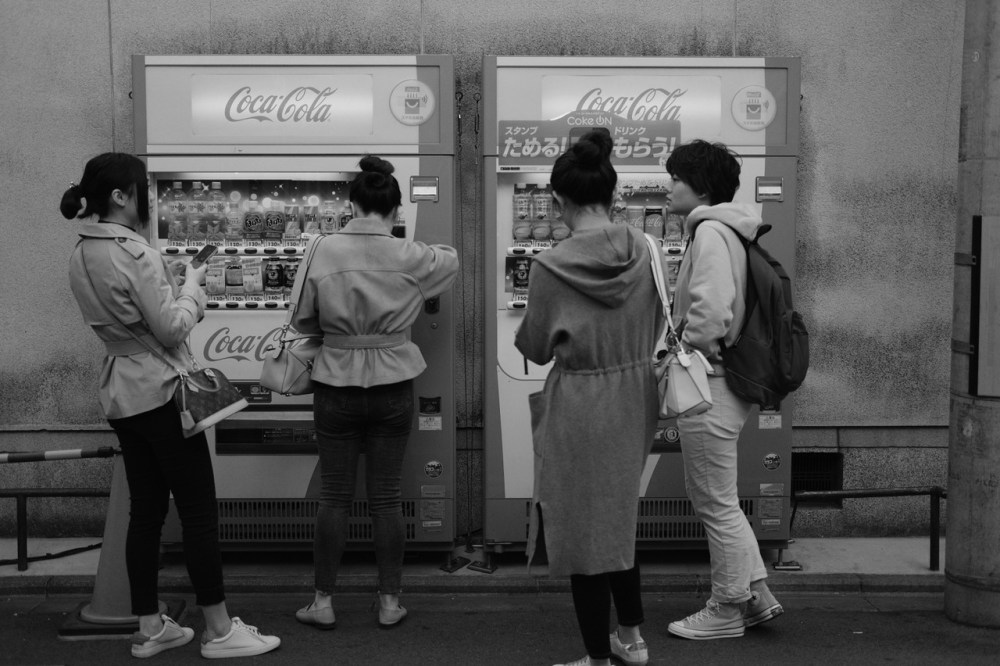
Sell That Sh*t & Buy A Fuji — An Interview with Gerardo Celasco

Photo by Gerardo Celasco

It’s my pleasure to introduce you to the wonderful photography of Gerardo Celasco! Although you might not have seen his pictures before, there’s a decent chance that you’ve seen Gerardo. He’s a model-turned-actor (among other things, including internationally competing show jumping horse rider, accomplished volleyball player, and financial expert) who does photography as a hobby. He has a lot of talent, and whatever he does he does very well—photography included.

Although he was born in Miami, Gerardo grew up in El Salvador. He later moved to Texas and studied at Southern Methodist University. His home base is now in California, but he frequently travels internationally, and of course brings a camera along—a Fujifilm camera—to capture the moments.

Photo of Gerardo by Harmoni Everett

Gerardo is perhaps best known for playing Miguel Lopez-Fitzgerald on the NBC drama Passions from 2006-2007. He also played Carlos Peña in Moneyball, Mark Kovac in two episodes of Bones, Xavier Castillo during Season 5 and 6 of How To Get Away With Murder, Ty Salazar in Next, and Dr. Nick Vega in a recent episode of Good Sam, among other things.

In the coming-soon-to-Netflix series Devil in Ohio Gerardo plays Detective Lopez. We’ll get more into this in a moment, but below you’ll find the trailer, which you should definitely take a moment to watch right now.

Fuji X Weekly: Hey, Gerardo! I’m truly honored for this opportunity to interview you! Let’s begin at the very beginning: where did your early interests in photography come from? Were cameras and pictures a big part of your childhood?

Gerardo Celasco: We didn’t grow up taking a lot of photos in my family and we didn’t have lots of cameras around when my siblings and I were growing up. My dad was an engineer and my mom worked in sales and retail for a shoe company in El Salvador. To this day, we still don’t take many photos when we’re together. When we’re on a trip we always say, “We have to take more group photos!” And since I always have a camera on me, I’m always the one taking the photos so I’m rarely in the pictures. 

Fuji X Weekly: How did you get started in photography?

Gerardo Celasco: I got started in photography pretty early on, but not necessarily behind the camera. When I was in high school I was asked to be the model for a campaign in El Salvador. Roberto Aguilar was the most sought out photographer in El Salvador. No one was doing what he was doing, and I got to be in front of his camera several times—it was my first time being in front of the camera. We became really close friends, and I learned so much from watching him work. He moved to Europe and became a professor in France for a few years, and is now living in London. Roberto was my first influence in photography, but I can also say he was my first influence in “performing” as well. I never went to drama school. I have a degree in Finance from Southern Methodist University—a life in entertainment wasn’t really in the cards for me growing up in El Salvador and the son of entrepreneurs.

Photo by Gerardo Celasco

Fuji X Weekly: What made you pursue photography further, take it more seriously?

Gerardo Celasco: This image [above] is my first one that shocked me when I saw it imported into my computer. I believe I shot it with a Leica D-Lux 4. There was no plan—it was on auto—and I got that “bokeh” everyone talks about. I didn’t know how that happened or how to recreate it, so that inspired me to really learn about the art form. I decided to enroll into a UCLA extension course for Photography, and did that for a few months. That’s where I learned about aperture and depth of field and things like that. 

Fuji X Weekly: What was your most memorable photography experience?

Gerardo Celasco: I think that first image I shot that shocked me is the most memorable. It’s what inspired all of my other images. I still love the photo so much. It’s very raw, very real. I can feel so much when I see it. It was shot in El Salvador in La Libertad near the beach. It was sticky and damp. The two women were working and cooking on open fire in that heat. Maybe it’s because I was there, but I feel all of that every time I see the image.

Photo by Gerardo Celasco

Fuji X Weekly: What was your first camera?

Gerardo Celasco: My first camera was one of the really small Canon PowerShots. It was a matte silver. I carried that thing everywhere—way before we had cameras in our cellular phones. The list goes on from there: Canon 20D, Leica D-Lux 4, Canon 5D Mark II, Fujifilm X100T, Sony a7, Fuji X-T2, Fuji X-Pro3—that is the trajectory into mirrorless, but more importantly how I found Fuji. I also shoot film with a Canon AE-1 Program, and my everyday—always with me—Olympus Mju II, which always sparks a conversation or a laugh when I pull it out. 

Fuji X Weekly: What made you buy your first Fujifilm camera? What do you shoot with now?

Gerardo Celasco: A trip to Morocco with my 5D led me to give up on my entire Canon photography gear. It was so heavy, and was very distracting. You couldn’t really get away with shooting discretely with a camera that size. At the time my good friend, cinematographer and camera/steadicam operator Eduardo Fierro, was a Fuji shooter. His exact words when I complained about my Canon were “Vendé esa mierda y compráte la Fuji” (which means: sell that shit and buy a Fuji!). So that’s what I did, and the X100T was my first Fuji. I now shoot with the X-Pro3, paired with a Fuji 27mm f/2.8, 35mm f/2, or 16-55 f/2.8. 

Photo by Gerardo Celasco

Fuji X Weekly: What is your favorite aspect of Fujifilm cameras?

Gerardo Celasco: What I love most about the Fuji lineup—other than the obvious size and price—is the menu and the film simulations. The user interface is great and easy to get around. But for me, the film simulations are what really sets it apart from anything else. I don’t do any post editing on my images (because I haven’t learned Capture One or Photoshop), and I shoot everything JPEG (mainly because I don’t know what to do with a RAW file, and have never felt the need for it). Fuji X Weekly is my go to App for Film Simulation Recipes. Funnily enough, I believe that is how we met: I sent you a DM on Instagram, praising all of your Film Simulation Recipes and the RitchieCam App on the iPhone.

Fuji X Weekly: That’s right! I definitely remember that day—it was a nice surprise, and a bit of a shock. By the way, which Film Simulation Recipes do you like best?

Gerardo Celasco: My favorite film simulations are Portra 400, Portra 800, and the Ilford black-and-white ones. I honestly like the output of the Fuji Portra recipes more than the images I get with my film camera using real Portra 400 film—and it’s also cheaper.

Photo by Gerardo Celasco

Fuji X Weekly: What do you photograph most now?

Gerardo Celasco: I like shooting life, but I don’t like calling it “street photography.” I don’t have a style, and I honestly don’t know what I’m doing most of the time. I just shoot when I’m inspired. And I shoot what seems interesting to me at that moment. But I never have a plan. I just simply shoot, and share my images. I don’t like the pressure of someone asking me to photograph something or an event—I get so much satisfaction in just showing up with a camera and capturing beautiful moments when I haven’t been asked to, and then sharing those moments. 

Fuji X Weekly: Who are your photographic influences?

Gerardo Celasco: I don’t have a list of photographers that have influenced me—I can probably only name a handful of them—but it’s not like I’m trying to do what they did. Vivian Maier, Ansel Adams, Garry Winograd, Henri Cartier-Bresson—those names comes to mind without me cheating and looking at my bookshelf.

Photo by Gerardo Celasco

Fuji X Weekly: How has your acting career influenced your photography?

Gerardo Celasco: Most people think that being an actor influenced my photography, but what it did was enhance it. Photography (in front or behind the camera), was my first step to becoming an actor—I’ve always felt that photography led me to my acting career. Being on set has made me more comfortable in front of the camera but at the same time it inspires me to want to shoot more. I’m always chatting up the cinematographer or the camera operators when I am on a set—mostly I’m just asking lots of questions about composition and lighting. Those men and women know so much, and I just try to learn and soak up as much as they are willing to share. Their work is what inspires me today. 

Fuji X Weekly: Tell me about your upcoming Netflix series, Devil in Ohio.

Gerardo Celasco: Ah. Devil in Ohio! I feel like you and your wife have been patiently waiting for that. I think I was shooting that when I found RitchieCam and we started talking, only to find out you were the same person behind Fuji X Weekly! We’re only a couple weeks away from the premiere day. It will air on Netflix on September 2, and all 8 episodes will be available.

The show is based on a book by the same name written by Daria Polatin. Daria is also the showrunner for the show. The story was inspired by true events, which always makes it more interesting. I would describe it as a family drama meets a suspense/thriller. It has elements of both. Emily Deschanel (who I worked with many years ago on the final episodes of Bones), plays Suzanne Mathis, a Psychiatrist who is caring for an underage girl who has turned up at hospital clearly in distress. No one comes looking for the girl, so Suzanne decides to take her into her home until they can find a family for her. Doesn’t take long to realize that the girl has escaped from a cult, putting the family and their relationships in danger. I play Detective Alex Lopez, who is a transplant from big city Chicago. He’s a fish out of water, and by-the-book, but also has no idea what he’s dealing with by taking on this case. We had a great group of actors, great directors, and an incredible crew. I hope people find it and enjoy it!

Photo by Gerardo Celasco

Fuji X Weekly: Gerardo, thank you so much for taking time out of your day to allow me to interview you—it’s been such a pleasure!

Gerardo Celasco: I’d just like to say thank you for including me in this. I’m a big fan of Fuji X Weekly, and for you to ask me to be a part of it is really cool.

Check out Gerardo Celasco on Instagram (Here and Here)—give him a follow plus “heart” some of his pictures. Mark your calendars now, and be sure to binge-watch Devil in Ohio on September 2nd!

Check out more of Gerardo’s photography below:

Photo by Gerardo Celasco

The photographs in this article are © Gerardo Celasco.

Fujifilm X-E4 (X-Trans IV) Film Simulation Recipe: Kodak Max 800

Ice Cold Pepsi – Farmington, UT – Fujifilm X-E4 – “Kodak Max 800”

This Film Simulation Recipe is modeled after some prints I found in a box that I thought looked interesting. I didn’t initially know what film had been used, but after locating the negatives I discovered it was something called Kodak GT 800-3, and I had no idea what that was. After much sleuthing, I found out it was Kodak Max Zoom 800, also known as Max 800. The film was shot in 2006 (I believe by my wife), and it was the third and final iteration of the emulsion (this version was introduced in 2000). Max Zoom 800 was replaced in 2006 by the similar Max Versatility Plus 800 (which was around for five or six years before its discontinuation).

Kodak made Max 800 film for point-and-shoot and disposable cameras—specifically, they marketed it for point-and-shot cameras with a zoom lens, which exaggerated camera shake. It was a cheap high-ISO consumer color negative film intended for the novice. It had a large latitude for underexposure and (especially) overexposure, but color reproduction was a little different (some have said “bland” or “weird”) when compared to other Kodak films. Kodak intended the film to be printed on Ektacolor Edge paper, but my samples were printed on Fujicolor Crystal Archive paper (which certainly affects the aesthetic)—this recipe is modeled after my samples.

Winter Greenhouse – Farmington, UT – Fujifilm X-E4 – “Kodak Max 800”

This Kodak Max 800 recipe is compatible with the Fujifilm X-Pro3, X100V, X-T4, X-S10, X-E4, and X-T30 II cameras. Because it uses the Classic Negative film simulation and Clarity, it is not compatible with the X-T3 and X-T30, unfortunately. For those with the X-H2s, it’s my understanding that this recipe is completely compatible and renders near identically, but I have not tested it to know for certain. Those with newer GFX cameras can use it, too, although it will render a little differently.

Classic Negative
Dynamic Range: DR400
Highlight: -2
Shadow: +1
Color: -1
Noise Reduction: -4
Sharpness: -2
Clarity: -4
Grain Effect: Strong, Small
Color Chrome Effect: Strong
Color Chrome Effect Blue: Off
White Balance: 7300K, -5 Red & -2 Blue
ISO: Auto, up to ISO 6400
Exposure Compensation: 0 to +2/3 (typically)

Example photographs, all camera-made JPEGs captured using this “Kodak Max 800” Film Simulation Recipe on my Fujifilm X-E4:

Frozen Ponds at a Bird Refuge – Farmington, UT – Fujifilm X-E4
Winter Gate – Farmington, UT – Fujifilm X-E4
Open Gate – Farmington, UT – Fujifilm X-E4
Icy Marshland – Farmington, UT – Fujifilm X-E4
What Remains of Summer – Farmington, UT – Fujifilm X-E4
Winter Water – Farmington, UT – Fujifilm X-E4
Frozen Marsh Pond – Farmington, UT – Fujifilm X-E4
Nature Trail – Farmington, UT – Fujifilm X-E4
Green Truck – Farmington, UT – Fujifilm X-E4
Santa’s Sled – Farmington, UT – Fujifilm X-E4
Neighborhood Path in Winter – Farmington, UT – Fujifilm X-E4
Trail Closed – Farmington, UT – Fujifilm X-E4
No Shooting Past the Fence – Farmington, UT – Fujifilm X-E4
Pallets – Farmington, UT – Fujifilm X-E4
Inside Abandoned Shed – Farmington, UT – Fujifilm X-E4
Walking Tunnel – Farmington, UT – Fujifilm X-E4
Farm in the City – Farmington, UT – Fujifilm X-E4
Barnes & Noble Window – Farmington, UT – Fujifilm X-E4
Building Top in Last Light – Farmington, UT – Fujifilm X-E4
Buildings & Palms – Buckeye, AZ – Fujifilm X-E4
Backyard Garden Trumpets – Buckeye, AZ – Fujifilm X-E4
Illuminated Desert Shrub – Buckeye, AZ – Fujifilm X-E4

Find this Film Simulation Recipe and over 200 more on the Fuji X Weekly — Film Recipes App!

Help Fuji X Weekly

Nobody pays me to write the content found on fujixweekly.com. There’s a real cost to operating and maintaining this site, not to mention all the time that I pour into it. If you appreciated this article, please consider making a one-time gift contribution. Thank you!

$2.00

Fujifilm X-Trans IV FXW App Patron Early-Access Film Simulation Recipe: Vintage Print

Bell Tower – Litchfield Park, AZ – Fujifilm X-E4 – “Vintage Print”

The Fuji X Weekly App is free, yet becoming a Fuji X Weekly Patron unlocks the best App experience! One benefit of being a Patron is that you get early access to some new Film Simulation Recipes. These Early-Access Recipes will eventually become available free to everyone in time, including this new one. In fact, many Early-Access Recipes have been publicly published on this blog and the App, so now everyone can use them! Patrons help support Fuji X Weekly and, really, without them there would be no App. So I want to give a special “thank you” to all of the Patrons!

This recipe began when my wife suggested that I should try to emulate a certain look that she found. I wasn’t successful, but in my efforts I discovered these settings, which I thought looked interesting nonetheless. They remind me of vintage color prints—not from any specific film or process, but just my “memory color” (as Fujifilm puts it) of some old prints that I’ve seen in the past. It has almost a classic magazine quality to it, or even a bit of a post-card resemblance. Whatever it may or may not look like, it definitely has a vintage-like look that some of you might really appreciate.

All of these pictures were captured using manual vintage lenses, including—actually, mostly—a Helios 44-2. I also used a 5% CineBloom or 10% CineBloom filter with around half of them. I did this to help achieve an analog aesthetic. The use of vintage glass and diffusion filters aren’t required for this recipe, but you are certainly welcome to do so if you want—I think they help a little to take the digital edge off of the pictures.

Suburban Saguaro – Buckeye, AZ – Fujifilm X-E4 – “Vintage Print”

This “Vintage Print” Early-Access Recipe is compatible with the Fujifilm X-Pro3, X100V, X-T4, X-S10, X-E4, and X-T30 II cameras. Those with the X-H2s and newer GFX cameras can use it, too (results may vary, though). If you are a Fuji X Weekly App Patron, it’s available to you right now on the Fuji X Weekly App! If you don’t have the App, download it for free today.

Example photographs, all camera-made JPEGs captured using this “Vintage Print” Film Simulation Recipe on my Fujifilm X-E4:

Big Storm Looming in the Background – Buckeye, AZ – Fujifilm X-E4
Lake, House – Litchfield Park, AZ – Fujifilm X-E4
Jon Is Happy – Litchfield Park, AZ – Fujifilm X-E4
Labyrinth Church – Litchfield Park, AZ – Fujifilm X-E4
Saguaro & Dust – Buckeye, AZ – Fujifilm X-E4
Twin Saguaros – Buckeye, AZ – Fujifilm X-E4
Saguaro as Seen Through a Saguaro – Buckeye, AZ – Fujifilm X-E4
Teddy Bear Cholla – Buckeye, AZ – Fujifilm X-E4
Desert Spikes – Buckeye, AZ – Fujifilm X-E4
Desert Barrel – Buckeye, AZ – Fujifilm X-E4
Trumpets Down – Buckeye, AZ – Fujifilm X-E4
Bright Bougainvillea – Buckeye, AZ – Fujifilm X-E4

10 “WOW” Products Fujifilm Should Be Making Right Now

“We are working on WOW product development.” —Jun Watanabe, Product Planning Group Manager, Imaging Solutions Division, Fujifilm

Fujirumors reported on an article by Digital Camera Life that translated and summarized a video by Map Camera, which featured an interview with Fujifilm Product Planning Manager Jun Watanabe. In addition to the quote above, Jun also said, “I would like to continue working to create ‘WOW’ products with the development team, including me, so that we can meet everyone’s expectations and say, ‘I definitely want to buy this.'”

Before we go any further, I must point out that this seems a little like the “Telephone Game” where one person whispers something into someone’s ear, and that person whispers what they heard into the next person’s ear, and so on, until the last person speaks what they heard, which doesn’t much resemble what the first person whispered. Now add to that a translation of a translation, and we get these quotes by Jun Watanabe, which may or may not be what he actually said. However, for the purpose of this article, we’ll assume that Fujifilm is indeed currently working on products that will make people say “wow”—or at least products that the Product Planning Group thinks will make people say that—and they want to “meet everyone’s expectations” somehow.

There’s a lot to digest, of course. Sometime in the 1400’s, monk and poet John Lydgate stated, “You can please some of the people all of the time, you can please all of the people some of the time, but you can’t please all of the people all of the time.” No one product will “meet everyone’s expectations” but perhaps he simply means that between all of the projects that they’re working on, once they all come out, that there will be a “wow product” for everyone.

Coastal Blooms – San Simeon, CA – Fujifilm X-E4 – “Pacific Blues” recipe

I’m in a unique position here at Fuji X Weekly, because I hear from a lot of Fujifilm photographers—granted, mostly those who shoot with Film Simulation Recipes, which is certainly not everyone with a Fujifilm camera, but a large number nonetheless. I have a pretty good pulse on a large segment of Fujifilm’s customers. I know what would make a lot of their customers say, “I definitely want to buy this!” But Fujifilm has never asked me. I have a lot of valuable feedback that I would be more than happy to give to them, if they’re ever interested.

I think the top two things that would make the Fujifilm photographers in this audience say “wow” are 1) a recommitment to Kaizen updates, and 2) more JPEG options (film simulations and such). For example, the Classic Negative film simulation has more of a wow factor for many of the tens of thousands of people shooting with recipes than the autofocus speed of the X-H2s, and giving that film simulation to the X-T3—the all-time top selling model—via a firmware update is a no-brainer for making your customers happy. I assume, however, that the Product Planning Group is not involved with those things—it’s different departments altogether—so Jun and his gang might completely agree, but it wouldn’t make any difference.

What I thought I’d do with this article, on the off-chance that someone from Fujifilm reads it (maybe even Mr. Watanabe himself), is provide some ideas for “wow” products that Fujifilm photographers would want to buy. These are things that would make people take notice. I don’t think becoming more like another brand is a good way to make people say “wow” (except, perhaps, sarcastically). These are ideas for products that would set Fujifilm apart from the crowd, and not blend in. Ordered from least exciting to most (in my opinion anyway), here’s my list of the 10 “WOW” products that Fujifilm should be making right now!

10. Minimalist Model

Maybe just have this little screen and remove the big one.

The Fujifilm X-E4 is already a “minimalist” camera that people either love or hate, and in some ways Fujifilm wen’t too far, removing too many dials and switches and such. But, what if Fujifilm went even further?

Here’s my idea: no rear screen—just a hybrid viewfinder (maybe like the one in the X-Pro2?). Maybe include the little “box tab” screen of the X-Pro3? No video mode. Incorporate the dual shutter/ISO knob of the X100V. Add back the M/C/S switch. Maybe include a C1-C7 knob (or switch of some kind)? Otherwise, clean and simple. Small and lightweight. This wouldn’t be the X-E5, but a new model altogether, made for the experience of shooting with it.

I’m sure this would not sell like hotcakes, and a lot of people wouldn’t like it, but it would certainly grab headlines. Every camera reviewer would want to get their hands on one, just to try it. A lot of people would want to try it. I would want to try it, and most likely own it. Crazy? Yes. Great? Probably, depending on the design choices—it will be a tough balancing act, though, and making it “just right” won’t be easy.

9. 135mm Lens

135mm focal-length.

Fujifilm has a 90mm prime and a (really large and expensive) 200mm prime, but nothing in-between. I found a vintage Vivitar 135mm lens that I just love using, and it made me wonder why doesn’t Fujifilm have a 135mm prime? They should.

This isn’t something to get carried away with. Should it have OIS (stabilization)? It could, but it definitely doesn’t have to. Should it have a wide maximum aperture? F/2.8 is plenty wide enough. Should it be weather-sealed? Probably, I think that’s more-or-less expected nowadays. This shouldn’t be a $6,000 lens or even a $1,200 lens, but sub-$1,000—maybe around $800-$900.

8. Another Pancake Lens

The 27mm pancake helps make this setup super small and lightweight.

One obvious advantage of APS-C over full-frame is size and weight. A big draw to Fujifilm cameras, from those who in the past shot Canon or Sony or Nikon, is the smaller package. It can be such a pain to lug around big and heavy gear, and after doing that for awhile it’s refreshing to have something less intrusive around your neck. Not only are the cameras smaller and lighter, but the lenses can be, too.

Fujifilm has a number of small and lightweight primes, but only two pancakes: the 18mm f/2 and 27mm f/2.8. The 18mm is long overdue for an update (keep the optics, give it a faster and quieter motor). The 27mm, which was recently updated (but is hard to find because it sells out even before hitting the store shelves), is my personal favorite lens. Why not add another pancake option?

I think there are three potential focal-lengths for the new pancake, but I’m not certain which would be best. My personal top-choice is something longer than the 27mm, perhaps a 40mm f/2.8. This short-telephoto would be good for portraits and walk-around photography. Another option would be something wider than the 18mm, perhaps 14mm (or 15mm) f/3.5. The third option would be something in-between 18mm and 27mm, like maybe 23mm f/2.8. I don’t know which one should be made, but I know that one of them should, because size and weight are a big draw to the system, and having a serious series of pancake lenses would do a lot to emphasis that advantage.

7. GFX100R

This is shape that the GFX100R should have.

I don’t own a GFX camera, but if I did, it would definitely be a rangefinder-styled model. So far, the GFX 50R is the only rangefinder-styled camera in the GFX lineup, and it’s old—almost four years old now. It’s the cheapest GFX model—you can pick one up for $2,850 right now—but maybe it hasn’t sold well, I don’t know (perhaps that’s why it’s the only one). If it has sold at least somewhat well, I think it makes a lot of sense to offer a 100-megapixel updated model with the same sensor as the GFX100S. That for sure would make people say wow!

6. ISOCELL

I captured this picture in 2012 using a Samsung NX200.

This isn’t so much a product as it is a technology. Samsung partnered with Fujifilm to develop the ISOCELL technology that is used in a number of cellphone cameras now. If Fujifilm used a Samsung-made ISOCELL sensor with “Tetra” pixel-binning for X-Trans, that would grab headlines. Imagine a 112-megapixel X-Trans VI sensor that produced 28-megapixel images for high-ISO or extended dynamic range, and otherwise delivered medium-format-like high-resolution pictures. People would take notice!

5. Infrared Camera

Straight-out-of-camera infrared picture on non-converted Fujifilm X-E4.

A number of people want to do IR photography, but the conversion process is invasive and expensive. The only camera-line that makes infrared photography easy is the Sigma SD models, which include a removable IR filter—take the filter off and shoot IR photography, put it back on and shoot normal. I don’t know if that’s particularly practical for Fujifilm, but they could make an already-IR camera model. In fact, Fujifilm did this with the X-T1; however, it was only available for medical purposes, and not sold to the general public.

I don’t think an IR model would need to be the X-T4 (or future X-T5), but something more affordable, like the X-T30 II or future X-T40. Obviously not everyone would go out and buy one, but I think there’d be enough interest to make it worthwhile for Fujifilm to produce. It would certainly be a wow-camera for some photographers.

4. Digital XPan

XPan aspect ratio captured with the RitchieCam App on my iPhone.

The XPan cameras were a joint venture between Fujifilm and Hasselblad, beginning in 1998, that used 35mm film to capture panoramic pictures in the 65×24 aspect ratio. While XPan cameras weren’t huge commercial successes, they gained a cult-following—so much so that Fujifilm has included the XPan aspect ratio as an option on the latest GFX models.

My idea is not for a 65×24 crop, but for a camera with a 65×24-shaped sensor. This would require a special-built sensor, which might be both difficult and expensive to procure. I think it would need to be in an X-Pro-like body, and probably should have a fixed-lens… maybe 30mm f/2.8? If it were interchangeable-lens, perhaps it would require two or three special lenses to use the full sensor (for the XPan ratio), or use any other X-mount lens and the camera automatically produces a 3:2 aspect ratio image. To me, the fixed-lens option makes the most sense.

I don’t think a digital XPan camera is especially practical, but it would be a huge headliner. Without a doubt it would make people’s jaws drop, and maybe even their wallets open.

3. X200 (Full-Frame X100)

Imagine this bigger….

I do not see Fujifilm jumping into the full-frame market. It’s crowded, and between X and GFX, Fujifilm can already basically indirectly compete well against it. Still, a lot of people have asked Fujifilm to produce a full-frame line; however, that’s like starting over from scratch, since most of their current X lenses won’t cover the sensor, and the GFX lenses are large and expensive compared to many full-frame options. It would be a huge financial risk that probably wouldn’t pay off. With that said, I do think there’s one full-frame camera that Fujifilm could produce that would be much less risky: the X200, a full-frame version of the X100-series.

It would obviously be bigger, heavier, and more expensive than the X100V. I think the focal-length of the lens should be different, too, so that it is not just the sensor size that separates the X100 line from the X200. Perhaps 50mm? Maybe 30mm? 35mm could be perfect, so it might not be a good idea to mess with it. There should be something more to differentiate the APS-C version from the full-frame, and Fujifilm would have to figure that out.

If Fujifilm did produce this camera, it would for certain have a big wow-factor, and I have zero doubts that people would line up to buy it.

2. X80

Imagine this smaller….

The Fujifilm X70 was doomed from the start. It was announced just three months before the first X-Trans III camera, right when Sony announced that they were not going to produce anymore 16-megapixel APS-C sensors. Fujifilm used their last X-Trans II sensors in this camera (plus the X-E2S), and when supplies ran out, so did this camera. When people asked when they were going to release a successor, Fujifilm stated that the X-Trans III sensor was “too hot” to place inside the tiny X70 body. The closest thing to a successor was the XF10, an inexpensive Bayer model with a PASM dial. But the X70 is much beloved by those who own them—to this day they can be tough to find, and they’re not cheap (don’t expect to find a bargain just because it’s old).

If Fujifilm were to release a real successor to the X70 (which would likely be called X80), it would no doubt be a hit. Smaller, lighter, and more-wide-angle than the X100 series, with the latest technology and JPEG options, would make people look. And buy! I’m confident that this would be a top-seller.

1. X100 and/or X-Pro “Acros Edition”

My top recommendation to Fujifilm for a “WOW” product is a monochrome-only camera based on either the X100 or X-Pro line, and called “Acros Edition.” It would basically be Fujifilm’s version of the Leica’s black-and-white-only cameras, like the M Monochrom, M10 Monochrome, and Q2 Monochrom.

What advantages do monochrome-only cameras have over color sensors? For one, all of the pixels are used for luminosity information (not just half, or in the case of X-Trans, 55%), which means more apparent resolution (more detailed image), less digital noise, improved high-ISO performance, and increased dynamic range. You can use color filters with it just like with black-and-white film. And it’s fun and cool. I’d be first in line to buy one, and I’m sure many reading this would be right beside me, as this would be the wow camera of all wow cameras.


I don’t know if any of these 10 product ideas are currently being considered by Fujifilm or not. Their idea of what would make people say “wow” and mine might be two completely different things. Fujifilm’s idea of what might make people say, “I definitely want to buy this,” could be 180º from mine. If Fujifilm should happen to read this, I want to make sure that my ideas were stated, because maybe—just maybe—this could impact future designs in some way. Probably not; however, it’s still fun to dream.

Now it’s your turn! Which of these 10 ideas would you be most excited for? What products would make you go “wow” that I didn’t include in this list? Let me know in the comments!

Happy Motoring: Abandoned Exxon — Route 66 — Santa Rosa, NM — Fujifilm X-E4 + Kodak Portra 400 v2

Happy Motoring! – Santa Rosa, NM – Fujifilm X-E4 – “Kodak Portra 400 v2”

Back in May, while on a lengthy roadtrip, I stopped in Santa Rosa, New Mexico, for the night. A small town along historic Route 66, Santa Rosa pretty much exists to provide food, fuel, and beds for travelers passing east-and-west through The Land of Enchantment. Like a lot of old Route 66 towns, Santa Rosa has seen better days—there are many abandoned buildings along the highway, and some others that appear to not be far from their inevitable fate of abandonment.

Santa Rosa might be best known for a scene in The Grapes of Wrath, where Tom Joad watches a freight train cross a bridge over the Pecos River. Scars from The Great Depression are still visible if you look hard enough. The biggest tourist attraction is the Blue Hole, a natural swimming pond fed by a vast underground water system. While visiting Santa Rosa, I was asked by locals a couple of times, “Are you here for the Blue Hole?” I guess it’s a big deal, but I didn’t make time to see it.

I did make time to photograph a few of the abandoned buildings. One was an old Exxon gas station. This particular service station offered two grades of gas, two stalls for vehicle maintenance, and two restrooms. You could buy maps or a soda from a vending machine. Inside was an old Dairy Queen sign that I do not believe originated from this particular gas station, but probably another building elsewhere in town, perhaps owned by the same person.

Evening Charge – Santa Rosa, NM – Fujifilm X-E4 – “Kodak Portra 400 v2”

In an empty grass-filled lot next to the gas station I found some old playground equipment. There may have been a campground or RV park there at one time, but the playground is the only thing left. I suppose on hot summer nights, the ghosts who still use the teeter-totter can get a coke from the abandoned Exxon next door.

Exploring and photographing places like this is both fascinating and frightening. It’s like a large time capsule that broke open years before being discovered, now filled with retro nostalgia and haunting decay. You don’t know what you’ll find—what’s hiding behind a corner—and even if there isn’t any danger, it’s still not safe. Going into abandoned buildings is never safe. I do believe that it’s important to photograph these places for several reasons: they’re always changing (due to nature and vandals) and will eventually be completely gone, they offer a glimpse into a previous time that’s long gone and fading from our memories, and to document the way societies deals with unwanted junk from broken lives and broken dreams. As Troy Paiva put it, these places are “steeped in Wabi-Sabi feelings of accepting loss and finding beauty and nobility in decay.”

The sun was low while I was there, preparing to set behind the western horizon—I had about 30 minutes of wonderful “golden hour” light to work with. I used my Fujifilm X-E4 with a Fujinon 27mm f/2.8 lens attached to it to capture these images. The Film Simulation Recipe that I used for these photographs was Kodak Portra 400 v2, which is one of my favorites—the Kodak-like colors and tones are just so lovely—an excellent option for this particular scene and light.

Ring – Santa Rosa, NM – Fujifilm X-E4 – “Kodak Portra 400 v2”
Unleaded Regular – Santa Rosa, NM – Fujifilm X-E4 – “Kodak Portra 400 v2”
Zero Gallons Available – Santa Rosa, NM – Fujifilm X-E4 – “Kodak Portra 400 v2”
Gas & Games – Santa Rosa, NM – Fujifilm X-E4 – “Kodak Portra 400 v2”
Rusty Hoop – Santa Rosa, NM – Fujifilm X-E4 – “Kodak Portra 400 v2”
Dark Lights – Santa Rosa, NM – Fujifilm X-E4 – “Kodak Portra 400 v2”
Ice Cold Coke – Santa Rosa, NM – Fujifilm X-E4 – “Kodak Portra 400 v2”
Fan Belts – Santa Rosa, NM – Fujifilm X-E4 – “Kodak Portra 400 v2”
Someone Left The Lights On – Santa Rosa, NM – Fujifilm X-E4 – “Kodak Portra 400 v2”
Toolbox – Santa Rosa, NM – Fujifilm X-E4 – “Kodak Portra 400 v2”
Still Being Repaired – Santa Rosa, NM – Fujifilm X-E4 – “Kodak Portra 400 v2”
Exxon Pumps – Santa Rosa, NM – Fujifilm X-E4 – “Kodak Portra 400 v2”
DQ Sandwich – Santa Rosa, NM – Fujifilm X-E4 – “Kodak Portra 400 v2”
Exxon – Santa Rosa, NM – Fujifilm X-E4 – “Kodak Portra 400 v2”
Nickel & Dimed – Santa Rosa, NM – Fujifilm X-E4 – “Kodak Portra 400 v2”
Application Information – Santa Rosa, NM – Fujifilm X-E4 – “Kodak Portra 400 v2”
Atlas Tires Book – Santa Rosa, NM – Fujifilm X-E4 – “Kodak Portra 400 v2”
Sandia Peak – Santa Rosa, NM – Fujifilm X-E4 – “Kodak Portra 400 v2”
Time Stands Still – Santa Rosa, NM – Fujifilm X-E4 – “Kodak Portra 400 v2”

This post contains affiliate links, and if you make a purchase using my links I’ll be compensated a small amount for it.

Fujifilm X-E4 Black    Amazon   B&H
Fujifilm X-E4 Silver   Amazon   B&H
Fujifilm X-E4 Black + 27mm f/2.8    Amazon   B&H
Fujifilm X-E4 Silver + 27mm f/2.8   Amazon   B&H

Help Fuji X Weekly

Nobody pays me to write the content found on fujixweekly.com. There’s a real cost to operating and maintaining this site, not to mention all the time that I pour into it. If you appreciated this article, please consider making a one-time gift contribution. Thank you!

$2.00

Fujifilm X100V (X-Trans IV) Film Simulation Recipe: Fujicolor Analog

Cotton On – Farmington, UT – Fujifilm X100V – “Fujicolor Analog”

I was asked to recreate the look of a certain photographer, and I noticed that a lot of their photographs had a Classic Negative aesthetic, so I thought it would be easy to mimic. It turns out that this person shoots a lot of film, including (but not limited to) Fujicolor C200 and various Superia emulsions, as well as digital (but not Fujifilm, as far as I can tell), using RNI and perhaps some other filters or presets. Nothing said what each picture had been captured with, so it became difficult to recreate. After a little frustration, I decided to select only pictures with a certain aesthetic to attempt to emulate—I believe they might have been captured on a Superia emulsion, but they might not have been—they might not even be film! I think I was able to create a pretty close facsimile to this person’s aesthetic… at least one of the many various (but still somewhat similar) looks that this photographer has.

One film can have many different looks, depending on how it was shot, developed, and printed or scanned. I do believe this “Fujicolor Analog” recipe mimics the aesthetic of a Fujifilm color negative film, but which exact film, and how handled, is uncertain. What is certain is that this is a very nice recipe that some of you will love! This Film Simulation Recipe was a Fuji X Weekly App Patron Early-Access Recipe; however, a different recipe has replaced it, and so now it’s available to everyone!

Noble Fir – Kaysville, UT – Fujifilm X100V

Because this recipe uses Classic Negative, Color Chrome FX Blue, and Clarity, it is only compatible with the Fujifilm X-Pro3, X100V, X-T4, X-S10, X-E4, and X-T30 II cameras (and likely the X-H2s, too, although I have not tested it). I believe those with newer GFX cameras can also use it, although it will likely render slightly different. Unfortunately, it is not compatible with the X-T3 and X-T30 or older cameras.

Classic Negative
Dynamic Range: DR400
Highlight: -1
Shadow: 0
Color: -3
Noise Reduction: -4
Sharpness: 0
Clarity: -3
Grain Effect: Weak, Small
Color Chrome Effect: Strong
Color Chrome Effect Blue: Strong
White Balance: 6900K, -5 Red & +5 Blue
ISO: Auto, up to ISO 6400
Exposure Compensation: 0 to +1 (typically)

Example photographs, all camera-made JPEGs captured using this “Fujicolor Analog” Film Simulation Recipe on my Fujifilm X100V & Fujifilm X-E4 cameras:

Main St Market – Buckeye, AZ – Fujifilm X-E4
Backlit Bougainvillea Flower – Buckeye, AZ – Fujifilm X-E4
Cloud Behind Trees – Buckeye, AZ – Fujifilm X-E4
Pine Trunk – Kaysville, UT – Fujifilm X100V
Burly Ladder – Kaysville, UT – Fujifilm X100V
Red Lights – Kaysville, UT – Fujifilm X100V
Utah Reeds – Farmington, UT – Fujifilm X100V
Pine in the Sky – Farmington, UT – Fujifilm X100V
Withering Blooms – Orem, UT – Fujifilm X100V
Peaks Above The Gap – Orem, UT – Fujifilm X100V
Arts – Draper, UT – Fujifilm X100V
Stop Spreading Germs – Draper, UT – Fujifilm X100V
Pharmacy Lift – Centerville, UT – Fujifilm X100V

Find this film simulation recipes and over 200 more on the Fuji X Weekly — Film Recipes App!

Help Fuji X Weekly

Nobody pays me to write the content found on fujixweekly.com. There’s a real cost to operating and maintaining this site, not to mention all the time that I pour into it. If you appreciated this article, please consider making a one-time gift contribution. Thank you!

$2.00

Fujifilm X-E4 (X-Trans IV) FXW App Patron Early-Access Film Simulation Recipe: Eterna Bleach Bypass

Evening on Main – Buckeye, AZ – Fujifilm X-E4 – “Eterna Bleach Bypass”

The Fuji X Weekly App is free, yet becoming a Fuji X Weekly Patron unlocks the best App experience! One benefit of being a Patron is you get early access to some new Film Simulation Recipes. These early-access recipes will eventually become available free to everyone in time, including this new one. In fact, many early-access recipes have already been publicly published on this blog and the App, so now everyone can use them. Patrons help support Fuji X Weekly and, really, without them there would be no App. So I want to give a special “thank you” to all of the Patrons!

I was challenged by Thomas Schwab to create a Film Simulation Recipe that mimics the aesthetic of the picture in the background of Dan Bailey’s YouTube video discussing the Eterna Bleach Bypass film simulation. There were some challenges, including limited samples (which were viewed on a YouTube video), and the fact that I now live in Arizona and not Utah (no access to majestic snow-capped mountain scenes), but I do believe that I got in the ballpark. This is essentially a “black-and-white” recipe for color photography—capable of producing dramatic near-monochrome images.

Pacific Photographer – Pismo Beach, CA – Fujifilm X-E4

Because this “Eterna Bleach Bypass” recipe uses the Eterna Bleach Bypass film simulation, it is only compatible with those cameras that have it, which are the Fujifilm X-T4, X-S10, X-E4, and X-T30 II. I do believe that this recipe is fully compatible with X-Trans V (currently the X-H2s), but I have not tested it yet to know for certain. Those with newer GFX cameras can also use it, although it will likely render slightly different.

If you are a Fuji X Weekly Patron, this recipe is available to you right now on the App!

Example photographs, all camera-made JPEGs captured using this “Eterna Bleach Bypass” on my Fujifilm X-E4:

Suburban Roof Abstract – Buckeye, AZ – Fujifilm X-E4
CVS – Buckeye, AZ – Fujifilm X-E4
Climbing a Wall – Buckeye, AZ – Fujifilm X-E4
Wall Details – Buckeye, AZ – Fujifilm X-E4
Bougainvillea & Building Storm – Buckeye, AZ – Fujifilm X-E4
Clouds Above Mesa – St. George, UT – Fujifilm X-E4
Crashing Wave Along Coast – San Simeon, CA – Fujifilm X-E4
Backyard Garden Sunbeams – Buckeye, AZ – Fujifilm X-E4
Garden Trumpet – Buckeye, AZ – Fujifilm X-E4
Little Bug – Buckeye, AZ – Fujifilm X-E4
Saguaro Fingers – Buckeye, AZ – Fujifilm X-E4
Boardwalking – Pismo Beach, CA – Fujifilm X-E4

Is Boosting a Post on Instagram Worth It?

This article is a follow-up to my Instagram is Dying — For Photographers article that I published last month. It won’t apply to everyone reading this. If you have an Instagram “professional account” or have considered changing to one, this post is for you. Specifically, I wanted to look at what happens when you tap “Boost post”—an option only available for pro accounts—and find out if it’s worthwhile to do. What’s the process? How much does it cost? What do you get in return? Is it worth it?

To start with, I don’t recommend switching to a professional account on Instagram unless you really “need” to. The moment I switched to a pro account, my engagement dropped in half. You do get tools, such as analytics, and various other features in the “Professional Dashboard” to help you build your brand, but, unless you feel those things are necessary, I’d steer clear of switching. Meta basically says that the pro account will help you, but then they handicap you and want you to pay them money to solve it. I have had no interest in giving them my money—I simply want Instagram to show my posts to my followers, but that’s obviously not happening. After publishing that other article and reading all the feedback, I thought it would be worth exploring “Boost post” because there are probably many others who feel similarly, and are wondering if it’s worthwhile to try or just another scammy thing that Meta is doing.

Before I get into this, I think it’s worth going over some of the statistics. I’ve discovered that over the last year my Instagram posts tend to fall into one of four categories. About 50% of my posts get minimal engagement (likes, comments, etc.) and are seen by 15%-25% of my followers. About 30% of of my posts get moderate engagement and are seen by 40%-50% of my followers. About 15% of my posts get strong engagement and are seen by 60%-75% of my followers. About 5% of my posts get exceptional engagement and are seen by 85%-100% of my audience. If Instagram simply showed my posts to more of my followers, they’d get more engagement. Some of you might only see 5% of my posts. Half of you might only see one-in-three posts. I think only about 15% of my followers see all of my posts, which is crazy. You might notice similar statistics with your posts and your followers.

Under each of my posts, Instagram has a “Boost post” icon that taunts me. It’s intended to do that. “If you just press me, all your followers will see this post,” it says. But is that true? I didn’t know. I assumed, but I was ignorant, and I didn’t want to be ignorant. So I tapped it.

When you tap “Boost post” you are presented with three options: more profile visits, more website visits, and more messages. Under your boosted post, which is actually a sponsored ad, is a call-to-action button that will do one of three things, depending on the “goal” you select. I get about 50 messages a day on Instagram already, so I took that option off the table immediately. I ended up running two sponsored ads, and selected “more profile visits” for one and “more website visits” for the other. More profile visits is a call-to-action to visit your Instagram profile. Once there, I have no idea what people do, but they’re apparently taking a look at you. More website visits is a call-to-action to click a link to whatever website you want people to go to (I chose RitchieCam.com). More messages is a call-to-action to get direct messages on Instagram, I assume.

After that, you’ll be asked to “define your audience” so that Instagram knows who to show your ad to. You can select Automatic (“people like your followers”), or Create your own. I chose the latter for both posts. With that, you have to select the interest of those you want to target. Fujifilm is an option and photography is an option, but straight-out-of-camera, JPEG, and film simulation recipes are not—in other words, it’s more broad, and popular brands and common interests are what you have to choose from. Then, you have to select where those people live. I tried United States, but that was too large of a group apparently, so I had to narrow it down by state—you can select about 10-15, depending on the populations of those states. I’m sure smaller countries could have been chosen. You could select specific cities, too. I don’t like how Instagram set this up, but maybe it would work well for you, I guess depending on your situation. For most people, I imagine that Automatic is likely the best option.

Lastly, you have to select your budget ($5, $7, $20, and custom) and duration (1 to 30 days, or indefinitely until paused). For the first post I chose $5 each day for 5 days ($25 total), with an estimated reach of 4,000 to 10,000. The second post I selected $7 each day for 6 days ($42 total), with an estimated reach of 6,300 to 16,000. Tap “Next” to review, and your ad goes live. You can pay with a credit card or PayPal, which you setup the first time through.

So, how did my boosted posts (a.k.a. sponsored ads) go?

The first one, which had the goal of profile visits, was one of those 5% posts with tons of engagement. Unfortunately, when you boost a post, Instagram doesn’t tell you if the accounts reached were followers or non-followers (like they do otherwise), which was disappointing to learn. My suspicion is that they showed it to more followers plus more non-followers—a combination. This post reached over 37,000 people (I have 26K+ followers), so my assumption is that Instagram showed pretty close to 100% of my followers this post, plus 11K non-followers. That’s excellent! I wish all of my posts got this attention. However, Instagram claims that only 5% (less than 2K) saw this post as a result of the ad (less than half the reach that Instagram estimated). And, only 64 people viewed my profile as a result of the call-to-action, which is a small number (I think) for $25. I have no idea if any of those 64 learned of Film Simulation Recipes or followed me or anything else. Was this a rare “exceptional engagement” post because of the ad or in spite of it? I have no idea—I really didn’t get any answers.

The second one, which had a goal of website visits, was one of those 30% posts with moderate engagement. This post reached 15,000 people, and (just guessing) 10K-11K might have been followers. Instagram claims that 26% (less than 4K) saw this post as a result of the ad (significantly less than Instagram estimated). There were (supposedly) 52 people who visited my website as a result of the call-to-action, which isn’t a lot for the $42 spent. I have no way to know if that led to anything further.

I would have to boost a lot more posts to gain any real data to draw any conclusions. The odds are that one of these two posts “should have been” in the common 50% category that receive minimal engagement and views, but neither were. There were three other posts—one before the first ad, one in-between, and one after the second ad—two of which had minimal engagement (seen by less than 25% of my followers), and one had moderate engagement (seen by about 50% of my followers). It makes me think that Instagram does show your boosted posts to more of your followers, but I cannot say that with certainty, or give any kind of guess on how many it might be. It would be great if Instagram had that as an option: show post to all followers. Maybe charge $5 for that. But, that’s not an option. I do find it interesting that one ad was a top-30% post and the other was a top-5% post, so I do believe that boosting a post does just that—boosts a post. Imagine that. But I really don’t feel that the $67 I paid did much of anything other than that.

I think it was good to try, but I don’t think I’ll do it again. I paid about 40¢ per profile visit for the fist ad, and I paid about 80¢ per website visit for the second ad. That’s probably a decent price (cost-per-click) for digital advertisements, but definitely not something that I want to pay—maybe if I was selling something expensive it would be worthwhile. I just want Instagram to show my posts to my followers, and I do think boosting a post does that to a degree, but it’s an expensive way to do it, and not really “worth it” in my opinion.

By the way, be sure to follow me on Instagram if you don’t already.

SOOC Viewer’s Images Video!

This video is the viewer submitted photographs from SOOC Season 02 Episode 06. Yes, your wonderful pictures! The recipe-of-the-month was Fujicolor Pro 400H. I hope that you enjoyed shooting with it! Thank you to everyone who shared their images, to everyone who participated, and to everyone who tuned in!

For those who don’t know, SOOC is a monthly live video series, with each episode focused on a different Film Simulation Recipe. It is a collaboration between Tame Your Fujifilm (Fujifilm X-Photographer Nathalie Boucry) and Fuji X Weekly (Ritchie Roesch). SOOC is a fun and educational experience where we not only talk about Fujifilm camera settings, but also answer your questions and give tips and tricks. Basically, we’re trying to help you master your Fujifilm camera, with a focus on simplifying your photographic workflow.

If you missed Episode 06 when it was live, you can watch it now (below):

The current recipe-of-the-month is Vintage Agfacolor. My recommendation with this recipe is to go dark by decreasing the exposure a little. Embrace the deep shadows! Vintage Agfacolor is compatible with X-Trans III cameras. If you have an X-T3 or X-T30, simply set Color Chrome Effect to Off. If you are using an X-Pro3 or newer camera, you’ll have to additionally set Color Chrome FX Blue to Off, Clarity to 0, and choose either Grain size Small or Large (your choice). Remember to upload your images (click here) captured with the Vintage Agfacolor recipe by September 6th to be shown in the next broadcast, which will be on September 8th (mark your calendars now).

This is a complete aside, but my daughter, Joy, is really into animation. She’s still learning. She hopes to be an animator someday. She animated a little clip for Fuji X Weekly (below). She also made a short animation using the FlipaClip App as part of a remix challenge (FlipaRemix), which I’ve also included below. If you’re familiar with Studio Ghibli’s Howl’s Moving Castle, it should be instantly recognizable (yes, that’s Billy Crystal’s voice…).

Breathing Fresh Air into Your Photography with Fujifilm — An Interview with Matt Giesow of VAST Media

Photo by Matt Giesow

I wanted to follow-up my interview with Troy Paiva (click here to read it), which wasn’t directly related to Fujifilm cameras and Film Simulation Recipes (although it was highly relatable), with something directly connected to the topics that are typically found on the Fuji X Weekly blog. Just as I was contemplating who I was going to interview and what the exact subject might be, I received a message from Matt Giesow of VAST Media, a photo and video production company in Tulsa, Oklahoma. “I have been running my production company for nearly five years now,” Matt told me, “and picking up a Fuji has been a breath of fresh air.” He stated that using Film Simulation Recipes on his camera allowed him to deliver some images immediately to the client, and that his JPEG workflow is “so nice.”

His words echoed in my head for the rest of that day. I felt similarly when I first started in Fujifilm: it was like a breath of fresh air—cool, crisp, mountain air. That was before I had even discovered the great JPEG output of the cameras, and before I had begun to make recipes. It must be even more refreshing nowadays, with so many resources available—such as Fuji X Weekly. It’s an honor to help others also experience that “fresh air” that Fujifilm cameras can provide. I knew that I wanted the next interview to be with Matt, so the following morning I asked if he’d be willing. Thankfully, he was very enthusiastic, and we were able to accomplish it rather quickly. So, without any further delay, here’s my interview with Matt Giesow!

Photo by Matt Giesow

FXW: Hi, Matt! Thank you so much for taking time out of your day today to do this interview! Let’s begin at the beginning. Tell me how you got started in photography?

Matt Giesow: Hey, Ritchie! I’m a self-taught photographer, dating back to 2017 from “YouTube University”—that, and being on staff at a pretty creative church in Tulsa, Oklahoma, created a great launching pad into the world of photography and videography. 

FXW: What was your first camera?

Matt Giesow: An iPhone 4 and the VSCO app. My first camera purchased to learn photography on was the Canon 80D.

Photo by Matt Giesow

FXW: What were your early photographic interests?

Matt Giesow: I remember when instagram first came out, I tried to make my shots look like film using Insta’s built-in filters [laughter]. Today and I’m still interested in photographing people, places, and things with a nostalgic vintage look. 

FXW: What are your current photographic interests? What do you shoot just for fun?

Matt Giesow: I enjoy street photography. Exploring cities—both ones I know and ones that I’ve not yet been to—and finding hidden gems to capture. I also enjoy photographing my family (I’m a proud dad), documenting all of our memories.

Photo by Matt Giesow

FXW: Tell me about your production company. How did you get started with that?

Matt Giesow: VAST Media started about four years ago with a desire for me to create what could exist. We primarily focus within architecture and the real estate market. I have grown the business from a solo entrepreneur to a full team and a full service company now. It’s been amazing to be a part of it from day one—with the vision of the company—to now continuing to work within the company and have several people alongside me helping to move it forward.

Photo by Matt Giesow

FXW: What services do you provide?

Matt Giesow: VAST provides real estate listing marketing, brand advertising, and full-scale video production for anyone—from a business owner to a real estate agent to major organizations—that need to share their brand and story.

FXW: What else would you like people to know about VAST Media?

Matt Giesow: What I want people to know is that VAST Media is more than a single person with a camera. From the moment it launched, my goal was to make it not about me but about we. Often people get stuck relying on one solo creative. I wanted to create a brand that, no matter who showed up from my team, was consistent, and the brand was apparent—it’s all under one umbrella, and the product was not contingent upon a single person.

Photo by Matt Giesow

FXW: What made you pick up a Fujifilm camera?

Matt Giesow: Shooting with Sony cameras throughout most of my professional career, I always wondered about owning a Fuji. This last year I began to experiment with 35mm film photography. I realized very quickly that I love the process of shooting film, but I always want my images right away [laughter]. I found the solution to my problem on the Fuji X Weekly website, where I discovered Film Simulation Recipes. I began to see what shooters like me were doing to scratch that itch. I headed to eBay and quickly found an overpriced Fujifilm X100V and went for it. The X100V is my first and only Fujifilm camera at the moment.

Photo by Matt Giesow

FXW: What do you like most about it?

Matt Giesow: It’s been a dream to shoot with! So small—it’s a daily carry. I find myself pulling the car off numerous times throughout the day to get out and snap something that, in the past, I would have used my iPhone to capture. I love shooting straight out of camera with the film simulations baked in. It’s totally changed the way I shoot! Enjoying the process now, something that only 35mm film had given me before. 

FXW: Which Film Simulation Recipes do you like best and why?

Matt Giesow: Classic Negative is my go-to recipe in most scenarios for color. It fits the vibe and style that for years I tried to edit my Sony photos to look like. It’s perfect for street photography, travel—the reds are just gorgeous! Reggie’s Portra and Kodak Gold 200 are some other big favorites. For black-and-white, Ilford XP2 Super 400 is my go-to for darker, punchier pictures, and Ilford HP5 Plus 400 is my favorite for slightly softer, less contrasty black and white photos. 

Photo by Matt Giesow

FXW: How has using Fujifilm cameras impacted your professional photography and your personal photography?

Matt Giesow: Honestly, picking up a FujiFilm camera has been a breath of fresh air. Over the years I’ve invested a great deal in filling our gear lockers at VAST Media, but I’ve never had a personal connection with a camera quite like I do with my X100V. For me, shooting with a fixed focal length, and working so hard to nail the perfect shot in-camera is causing me to sharpen areas of my craft that I didn’t even realize were dull.  This in turn has kindled a new passion for photography that makes me feel like I did back in the beginning. The X100V doesn’t replace my ”professional” arsenal, but it’s a happy addition to every set I am on. The ability to take incredible behind-the-scenes photos on-set straight out of camera and deliver something right to the client’s hands before leaving is something very new—and I love it!

Photo by Matt Giesow

FXW: In wrapping this up, is there anything else you’d like to say?

Matt Giesow: A big “thank you” to you, Ritchie, for Fuji X Weekly! The Fuji community is just a different breed—friendly, helpful, and encouraging. It’s so great.

FXW: Thanks again, Matt, for allowing me to interview you!

Matt Giesow: Cheers!

Please visit VAST Media’s website, VAST Media’s Instagram, and Matt Giesow’s Instagram! Be sure to give him a follow, and tap the heart on some of his pictures.

All of the photographs in this article are © Matt Giesow, who captured them using his Fujifilm X100V and various Film Simulation Recipes.

SOOC is LIVE on Thursday!

The next SOOC episode will be live on Thursday, August 11! Join Fujifilm X-Photographer Nathalie Boucry and myself as we finish our discussion of the Fujicolor Pro 400H Film Simulation Recipe and introduce the next recipe-of-the-month: Vintage Agfacolor. The PreShow starts at 9:30 AM Pacific, 12:30 PM Eastern Time; if you can’t make the PreShow, be sure to tune in by 10:00 AM Pacific, 1:00 PM Eastern to catch the broadcast.

For those who don’t know, SOOC is a monthly live video series, with each episode focused on a different Film Simulation Recipe. It is a collaboration between Tame Your Fujifilm (Fujifilm X-Photographer Nathalie Boucry) and Fuji X Weekly (Ritchie Roesch). SOOC is a fun and educational experience where we not only talk about Fujifilm camera settings, but also answer your questions and give tips and tricks. Basically, we’re trying to help you master your Fujifilm camera, with a focus on simplifying your photographic workflow.

If you missed the last episode when it was live, you can watch it below:

See you on Thursday!

Fujifilm X-Trans III + X-T3/X-T30 Film Simulation Recipe: Melancholy Blue

Pops of Pink – Buckeye, AZ – Fujifilm X-H1 – “Melancholy Blue”

For this Film Simulation Recipe I wanted to combine the beautiful blues of the new Pacific Blues recipe with the dark moodiness of the Vintage Agfacolor recipe. The result is a slightly melancholic aesthetic that can also produce dramatic results in certain circumstances. It’s great for daylight photography—delivering interesting (yet quite dissimilar) results in both overcast and bright sunlight conditions, including Low Key photography—and it also seems like a good option for some artificial light situations. Despite its versatility, it’s not a recipe that everyone will love; however, I know that a few of you will really appreciate it.

Unless your camera is an X-Pro3 or newer, you cannot save a white balance shift with your C1-C7 custom presets; however, your camera will remember one shift per white balance type, so if each C1-C7 recipe uses a different white balance type, you won’t have to remember to change the shift when you change recipes. There aren’t very many recipes that use the Incandescent White Balance, but now you have another recipe option if you are using this method.

Enlightened Nature – Buckeye, AZ – Fujifilm X-T30 – “Melancholy Blue”

This “Melancholy Blue” Film Simulation Recipe is intended for Fujifilm X-Trans III cameras, plus the X-T3 and X-T30. I used it on my Fujifilm X-H1 and X-T30, and it did well on both. For newer X-Trans IV cameras, set Color Chrome FX Blue to Off, Clarity to 0, and Grain size to… either Small or Large, you’ll have to decide which you prefer.

Classic Chrome
Dynamic Range: DR200
Highlight: +3
Shadow: -1
Color: -2
Noise Reduction: -4
Sharpness: -1
Grain Effect: Weak
Color Chrome Effect: Off/NA
White Balance: Incandescent, +4 Red & -9 Blue
ISO: Auto up to ISO 6400

Exposure Compensation: -1/3 to -1 (typically)

Example photographs, all camera-made JPEGs captured using this “Melancholy Blue” Film Simulation Recipe on my Fujifilm X-T30 & Fujifilm X-H1 cameras:

Prickly Fruit – Buckeye, AZ – Fujifilm X-H1
Yellow on Top – Buckeye, AZ – Fujifilm X-H1
Dark Saguaro – Buckeye, AZ – Fujifilm X-H1
Buddies – Buckeye, AZ – Fujifilm X-H1
Lights Along A Wall – Buckeye, AZ – Fujifilm X-T30
Backyard Blooms – Buckeye, AZ – Fujifilm X-H1
Backlit Trumpets – Buckeye, AZ – Fujifilm X-H1
Twin Blooms – Buckeye, AZ – Fujifilm X-T30
Climbing Trumpets – Buckeye, AZ – Fujifilm X-T30
Bougainvillea Branch – Buckeye, AZ – Fujifilm X-H1
Block Wall Shadow – Buckeye, AZ – Fujifilm X-H1
Does Not Stop – Buckeye, AZ – Fujifilm X-H1
Roof Lines – Buckeye, AZ – Fujifilm X-T30

Find this Film Simulation Recipe and over 200 more on the Fuji X Weekly App!

Help Fuji X Weekly

Nobody pays me to write the content found on fujixweekly.com. There’s a real cost to operating and maintaining this site, not to mention all the time that I pour into it. If you appreciated this article, please consider making a one-time gift contribution. Thank you!

$2.00

Creative Collective 026: Simple Hack for Dreamy Lens Flare

I like using vintage lenses because they often have character, and sometimes that character is pronounced in the lens flare. When light is scattered within the lens system, such as reflected between the elements, you get lens flare. Some people love it and some people don’t. Modern lenses are precision engineered and coated to avoid lens flare as much as possible. If you’re one of those who like it and try to incorporate it within your photography, you might be disappointed that newer glass just doesn’t produce very much lens flare; however, there’s a cheap and simple hack for increasing the flare in your photographs.

If you are using a lens that’s not especially prone to lens flare and you want a little more of it in your pictures, it’s very easy to do.

Fujifilm X-E4 (X-Trans IV) Film Simulation Recipe: Pacific Blues

Coastal Blooms – San Simeon, CA – Fujifilm X-E4 – “Pacific Blues”

Sometimes—like “Arizona Analog“—Film Simulation Recipes come together quickly, and sometimes—like this recipe—they don’t. This particular recipe has been in the works for over a year! I’ve made several attempts, and I finally feel satisfied that it is right—or at least as “right” as I’m going to get it. But what is it?

I’ve had a few requests to mimic the aesthetic of Lucy Laucht‘s Spirit of Summer series, particularly the Positano Blues photographs. Lucy is most known for shooting with Leica cameras—both film and digital—but she also uses others, and I wasn’t sure what she employed for this project. Recently I discovered that Positano Blues was shot on film, but (as far as I’ve found) she doesn’t discuss which film. I did find a reference (not related to this specific project) that mentioned she has used Kodak Gold and Kodak Portra, and that she digitally edits the film scans to some degree. She mentions using VSCO with her digital images, and I wonder if she also utilizes it with her film, too. When I first saw the pictures in this series, I thought it had a Classic Negative vibe—a film simulation that emulates Fujicolor Superia film. Lucy’s pictures are warmer than Superia typically is, but so much depends on how a film is shot, developed, scanned, etc., on how exactly it looks, and she certainly could have used warming filter. No matter the film and process used by Lucy, there’s a certain “look” to the Positano Blues photographs that is recognizable and beautiful—no wonder why people want to emulate it!

Coast Blue – San Simeon, CA – Fujifilm X-E4 – “Pacific Blues”

While Lucy Laucht’s pictures have a recognizable aesthetic, there are subtle differences between the images. Once you study them closely, you realize that some are warmer and some are cooler. Colors are rendered slightly different in some pictures. In past attempts, I felt like I’d get it “right” for one picture but “wrong” for others; however, with this final attempt, I feel like it’s possible to get close to the “look” of most of the Positano Blues photos. I’m very satisfied with how this one turned out, and I know that many of you will appreciate it, too. Obviously it is intended for a summer day at the beach, but it will do well in many different daylight situations. This “Pacific Blues” Film Simulation Recipe is compatible with the Fujifilm X-Pro3, X100V, X-T4, X-S10, X-E4, and X-T30 II cameras. I assume that it will also work on the X-H2s and newer GFX cameras, but I haven’t tried it to know for sure.

Classic Negative
Dynamic Range: DR400
Highlight: -2
Shadow: +3
Color: +4
Noise Reduction: -4
Sharpness: -2
Clarity: -3
Grain Effect: Strong, Large
Color Chrome Effect: Strong
Color Chrome Effect Blue: Strong
White Balance: 5800K, +1 Red & -3 Blue
ISO: Auto, up to ISO 6400
Exposure Compensation: +2/3 to +1 (typically)

Example photographs, all camera-made JPEGs using this “Pacific Blues” Film Simulation Recipe on a Fujifilm X-E4:

Pier Feet – Avila Beach, CA – Fujifilm X-E4
Water Taxi – Avila Beach, CA – Fujifilm X-E4
Harford Pier – Avila Beach, CA – Fujifilm X-E4
Bird & Boats – Avila Beach, CA – Fujifilm X-E4
Bird ‘Bout To Get Wet – San Simeon, CA – Fujifilm X-E4
Ocean Post – San Simeon, CA – Fujifilm X-E4
Pacific Plants – San Simeon, CA – Fujifilm X-E4
Rocks in the Water – San Simeon, CA – Fujifilm X-E4
Central California Coast – San Simeon, CA – Fujifilm X-E4
Grass in the Sand – Pismo Beach, CA – Fujifilm X-E4
Beach Frisbee – Pismo Beach, CA – Fujifilm X-E4
Sax at the Beach – Pismo Beach, CA – Fujifilm X-E4
Surf Rider – Pismo Beach, CA – Fujifilm X-E4
Lone Rider – Pismo Beach, CA – Fujifilm X-E4
Two on the Wave – Pismo Beach, CA – Fujifilm X-E4
Evening Wave – Pismo Beach, CA – Fujifilm X-E4

Find this film simulation recipes and over 200 more on the Fuji X Weekly — Film Recipes App!

Help Fuji X Weekly

Nobody pays me to write the content found on fujixweekly.com. There’s a real cost to operating and maintaining this site, not to mention all the time that I pour into it. If you appreciated this article, please consider making a one-time gift contribution. Thank you!

$2.00

Fujifilm X-E4 (X-Trans IV) Film Simulation Recipe: Arizona Analog

Building Storm Over Desert Ridge – Buckeye, AZ – Fujifilm X-E4 – “Arizona Analog”

Inspiration can come suddenly and unexpectedly, and it’s important to be open to it when it comes.

I was at the grocery store the other day, waiting in line to checkout, standing right next to the magazine stand. My wife points out the latest issue of Arizona Highways, which I previously subscribed to, but (with my move from Utah) I let the renewal lapse. She says, “Wanna get it?” I shake my head no, then begin to load the groceries onto the belt. I didn’t want to get it because the subscription price for a year is the same price as four issues at the stand, and because I’m pretty busy right now (still unpacking boxes and such) and I might not read it anyway.

“Do you mind getting me an iced coffee?” My wife asked a moment later. Then, pointing at the stuff on the belt, she stated, “I’ve got this.” There’s a Starbucks in the grocery store, and I was happy to jump out of the line and get a couple of coffees. A few minutes later, just as the barista was done with our order, my wife walks up with the basket of bagged groceries. Sitting right on top was the Arizona Highways magazine.

Old Saguaro – Buckeye, AZ – Fujifilm X-E4 – “Arizona Analog”

When we got home, after unloading the car and putting everything away, I thumbed through the August issue. On page 10 was a photograph by Scott Baxter of a rancher wrangling cattle, which was in a small article called Sierra Bonita Ranch (the picture can be seen if you click the link—click on the picture to see the whole thing—I find it interesting how different it appears on my screen vs in the magazine). I grabbed my Fujifilm X-E4 and threw in some settings that I thought might be close.

I snapped a few photos in the yard, then showed my wife. “Those look good,” she said. “This is where I got the inspiration,” I stated as I showed her Scott’s picture in the magazine. She viewed the picture, then gave me a puzzled look. “We’ve only been home 10 minutes. You made this recipe from that picture?”

“Yes!” I replied with a smile. “Wow,” she said, “that’s really amazing!”

Suburban Americana – Buckeye, AZ – Fujifilm X-E4 – “Arizona Analog”

This recipe isn’t a 100% accurate match to Scott’s picture—it’s pretty close, but not perfect. Not surprising, it’s closer to the printed aesthetic than the digital look, as I hadn’t yet seen it online when I created the recipe. I considered attempting to more closely replicate the aesthetic of the picture, but I really like the look of this recipe—accurate or not—so I decided not to change it. I have no idea what Scott used to capture his picture… apparently he shoots a mix of film and digital.

Thanks to Scott Baxter, Arizona Highways, and my wife’s thoughtful gesture, the inspiration for this recipe came quickly. It was one of the fastest recipes that I’ve ever created. Certainly it’s not for every person or every situation, but I’m sure for some of you in the right situations, you’ll appreciate the aesthetic that this “Arizona Analog” Film Simulation Recipe delivers. It’s compatible with the Fujifilm X-Pro3, X100V, X-T4, X-S10, X-E4, and X-T30 II cameras—I assume the new X-H2s, too, but I haven’t yet tested it on X-Trans V.

Eterna
Dynamic Range: DR400
Highlight: -1
Shadow: +3
Color: -2
Noise Reduction: -4
Sharpness: -2
Clarity: -3
Grain Effect: Strong, Small
Color Chrome Effect: Weak
Color Chrome Effect Blue: Weak
White Balance: Daylight, +6 Red & -3 Blue
ISO: Auto, up to ISO 6400
Exposure Compensation: +1/3 to +1 (typically)

Example photographs, all camera-made JPEGs using this “Arizona Analog” Film Simulation Recipe on a Fujifilm X-E4:

Pavillion – Buckeye, AZ – Fujifilm X-E4
The New West – Buckeye, AZ – Fujifilm X-E4
Curved Trellis – Buckeye, AZ – Fujifilm X-E4
Evening Flowers – Buckeye, AZ – Fujifilm X-E4
Flower Garden Blossoms – Buckeye, AZ – Fujifilm X-E4
Real Bloom over Artificial Turf – Buckeye, AZ – Fujifilm X-E4
Trunk & Flowers – Buckeye, AZ – Fujifilm X-E4
Wall Flowers – Buckeye, AZ – Fujifilm X-E4
Fishhook Barrel Cactus Blossom – Mesa, AZ – Fujifilm X-E4
Rocky Hill Saguaro – Buckeye, AZ – Fujfilm X-E4
Desert Cholla – Buckeye, AZ – Fujifilm X-E4
Dusty Desert – Buckeye, AZ – Fujifilm X-E4

Find this film simulation recipes and over 200 more on the Fuji X Weekly — Film Recipes App!

Help Fuji X Weekly

Nobody pays me to write the content found on fujixweekly.com. There’s a real cost to operating and maintaining this site, not to mention all the time that I pour into it. If you appreciated this article, please consider making a one-time gift contribution. Thank you!

$2.00

Creative Collective 027: FXW Zine — Issue 09 — August 2022

The ninth issue of FXW Zine is out, and if you are a Fuji X Weekly Creative Collective subscriber, you can download it now!

What’s in the August issue? The cover story is a visit to the Arizona State University Polytechnic Campus in Mesa, Arizona, captured with my Fujifilm X-E4. There are a total of 24 photographs this month, including the cover image (above). I hope that you find it enlightening, entertaining, and inspiring!

If you haven’t joined the Creative Collective, consider subscribing today to get access to bonus articles and the FXW Zine—not just this issue, but the first eight issues, too!

Six Photographs… Plus SOOC will be LIVE in Two Weeks!

The next SOOC episode will be live in two weeks, on August 11! Join Fujifilm X-Photographer Nathalie Boucry and myself as we finish our discussion of the Fujicolor Pro 400H Film Simulation Recipe and introduce the next recipe-of-the-month: Vintage Agfacolor. Be sure to mark your calendars now! Also, don’t forget to upload your photographs captured with the Fujicolor Pro 400H recipe (click here) by August 9th to be included in the next broadcast.

Among all of the other recipes that I’ve been shooting with (and creating), I also shoot with the recipes that we feature in the show. I don’t just ask you to use them—I use them, too, as does Nathalie (← seriously, click that link). You can find six of my pictures below, three captured with Fujicolor Pro 400H and three with Vintage Agfacolor. Enjoy!

Pink Bougainvillea – Buckeye, AZ – Fujifilm X-E4 – “Fujicolor Pro 400H”
Flower in the Garden – Buckeye, AZ – Fujifilm X-E4 – “Fujicolor Pro 400H”
Cactus Fruit in Evening Light – Goodyear, AZ – Fujifilm X-E4 – “Fujicolor Pro 400H”
Vintage Blue – Buckeye, AZ – Fujifilm X-H1 – “Vintage Agfacolor”
Bird on a Branch – Buckeye, AZ – Fujifilm X-H1 – “Vintage Agfacolor”
Saguaro Desert – Buckeye, AZ – Fujifilm X-H1 – “Vintage Agfacolor”

If you missed the last episode of SOOC, I’ve included it below. Underneath that, you’ll find the viewer-submitted images video from that broadcast.

Fujifilm X-Trans I Film Simulation Recipe: Faux Classic Chrome

Bougainvillea Color – Buckeye, AZ – Fujifilm X-Pro1 – “Faux Classic Chrome”

A little over two years ago I figured out how to replicate default Classic Chrome using the PRO Neg. Std film simulation. I published my findings in a blog post, to hopefully be helpful to those with cameras which don’t have the Classic Chrome film simulations, such as the X-Pro1, X-E1, X100, and X100S. I didn’t make this an official Film Simulation Recipe because it was just emulating Classic Chrome without adjustments (other than Noise Reduction), which I didn’t think was especially exciting; however, I recently found out that this recipe is being used and there’s a desire for it to be included in the Fuji X Weekly App. I’m simply turning those two-year-old settings into an official Fuji X Weekly Film Simulation Recipe.

If you want a recipe that resembles Classic Chrome with DR100, Highlight 0, Shadow 0, Color 0, Sharpness 0, and AWB (without a shift), this recipe is a good facsimile of that. It’s not possible to 100% faithfully mimic Classic Chrome without Classic Chrome, but these settings are pretty close, and as close as you’re likely going to get.

Laughing at a Joke – Goodyear, AZ – Fujifilm X-Pro1 – “Faux Classic Chrome”

I created these settings on an X-Trans II camera, but all of these images were captured on my Fujifilm X-Pro1. If you have an X-Trans I or X-Trans II sensor that doesn’t have Classic Chrome but does have PRO Neg. Std, you can use this recipe to approximate default Classic Chrome. The results are pretty decent; it’s a solid all-around recipe that’s good for a variety of subjects and situations.

PRO Neg. Std
Dynamic Range: DR200
Highlight: +1 (Medium-Hard)
Shadow: +1 (Medium-Hard)
Color: +1 (Medium-High)
Sharpness: 0 (Standard)
Noise Reduction: -2 (Low)
White Balance: Auto, 0 Red & -1 Blue

ISO: Auto, up to ISO 3200
Exposure Compensation: 0 to +1/3 (typically)

Example photographs, all camera-made JPEGs using this “Faux Classic Chrome” Film Simulation Recipe on a Fujifilm X-Pro1:

Midday Palm – Goodyear, AZ – Fujifilm X-Pro1
Building, Clouds – Goodyear, AZ – Fujifilm X-Pro1
Mostly Sunny Bougainvillea – Buckeye, AZ – Fujifilm X-Pro1
Garden Trumpets – Buckeye, AZ – Fujifilm X-Pro1
Reaching Garden – Buckeye, AZ – Fujifilm X-Pro1
Pergola Roof Design – Buckeye, AZ – Fujifilm X-Pro1
Pop of Pink – Buckeye, AZ – Fujifilm X-Pro1
Hiding Blooms – Buckeye, AZ – Fujifilm X-Pro1
Scraggly Bloom – Buckeye, AZ – Fujifilm X-Pro1
Josh Looking at Something – Buckeye, AZ – Fujifilm X-Pro1

Find this film simulation recipes and over 200 more on the Fuji X Weekly — Film Recipes App!

Help Fuji X Weekly

Nobody pays me to write the content found on fujixweekly.com. There’s a real cost to operating and maintaining this site, not to mention all the time that I pour into it. If you appreciated this article, please consider making a one-time gift contribution. Thank you!

$2.00

Creative Collective 024: Going Long

Fujifilm X-H1 + Fujinon 100-400mm @400mm + “Acros Push Process

I recently visited a vista in Arizona that overlooks The Valley of the Sun, which is the nickname given to the Phoenix metropolitan area (beginning back in the 1930’s); the official name is The Salt River Valley. I brought along my Fujifilm X-H1, plus my Fujinon 90mm f/2, Vivitar 135mm f/2.8, and Fujinon 100-400mm lenses. Programmed into the X-H1 was my Acros Push Process Film Simulation Recipe. I thought it would be interesting to use these longer lenses to capture the views of the vast valley, plus the desert bluff behind me—never forget to check behind you when photographing, because it can be easy to miss something great when you’re not focused on it.

When I was a kid, my friends and I often played “catch” with a football. Sometimes whoever the quarterback was would shout, “Go long!” You’d run as fast as you could for a good distance, turn around to see the ball wizzing through the air—maybe you’d catch it and it would be amazing, maybe you ran too far or not far enough and the ball hit the ground.

Let’s see what happens when you “go long” with your lenses.

Fujifilm X-Trans III + X-T3 & X-T30 Film Simulation Recipe: Ektachrome E100GX

Pink Rose Blossom – Ogden, UT – Fujifilm X-T30

I wanted to make another recipe that uses the Fluorescent 2 (or “warm white fluorescent”) white balance. Why? Because this is a very underutilized and under appreciated option. I have only four other recipes that use it—Provia 400, Fujicolor Super HG, Super HG Astia, and Fujichrome Sensia 100—and those are all very good recipes. I didn’t have any specific film in mind when I made this, I was simply attempting something that looked good.

After shooting with it awhile, and looking at the pictures, the results looked familiar, but I couldn’t put a finger on it. I started digging through my old pictures, and wasn’t finding anything. Then I stumbled on a few Kodak Ektachrome E100GX frames, and the results were similar.

Ektachrome E100GX was a color transparency film made by Kodak from 2001-2009, and is what replaced E100SW. It was known for vibrant saturation, a warm color cast, and fine grain. It wasn’t quite as warm, vibrant, or sharp as E100SW, but overall very similar, yet with finer grain. Some people thought it was better than E100SW, some people thought it was worse. I liked E100SW a bit better, but E100GX was still a good film, particularly if you wanted something warm, colorful, and contrasty, but not overly so.

Intelligent Children – Bountiful, UT – Fujifilm X-T30 – “Ektachrome E100GX”

This recipe is compatible with Fujifilm X-Trans III, X-T3 and X-T30 cameras. For those with newer X-Trans IV cameras, to use this recipe simply set Color Chrome FX Blue to Off, Clarity to 0, and Grain size to Small.

Classic Chrome
Dynamic Range: DR200
Highlight: -2
Shadow: +2
Color: +4
Noise Reduction: -4
Sharpness: -2
Grain Effect: Weak
Color Chrome Effect: Off/NA
White Balance: Fluorescent 2, -1 Red & -6 Blue
ISO: Auto up to ISO 6400

Exposure Compensation: +1/3 to +1

Example photographs, all camera-made JPEGs captured using this “Ektachrome E100GX” film simulation recipe on my Fujifilm X-T30 & Fujifilm X-H1 cameras:

Yellow Glow of Iowa – Bountiful, UT – Fujifilm X-T30
Sunlight Reflected on Window – Bountiful, UT – Fujifilm X-T30
Dark Red Tree & Partly Cloudy Sky – Ogden, UT – Fujifilm X-T30
Dead Leaves in a Dry Drinking Fountain – Bountiful, UT – Fujifilm X-T30
Small Waterfall – Ogden, UT – Fujifilm X-T30
Forest Graffiti – Ogden, UT – Fujifilm X-T30
Growing Out of the Side – Ogden, UT – Fujifilm X-T30
Two Boys Going Down a Trail – Ogden, UT – Fujifilm X-T30
Autumn Trunks – Ogden, UT – Fujifilm X-T30 – “Ektachrome E100GX”
Backlit Yellow Leaf – Ogden, UT – Fujifilm X-T30
Rose in the Garden – Ogden, UT – Fujifilm X-T30
Bright Bloom – Ogden, UT – Fujifilm X-T30 –
Rose Clump – Ogden, UT – Fujifilm X-T30
Wagon Duty – Ogden, UT – Fujifilm X-T30
Pines in Autumn – Ogden, UT – Fujifilm X-T30
Reflection in the River – Ogden, UT – Fujifilm X-T30
Left – Bountiful, UT – Fujifilm X-T30
Warm Pink Blooms – Buckeye, AZ – Fujifilm X-H1
Bougainvillea Pink – Buckeye, AZ – Fujifilm X-H1
Little Orange Flowers – Buckeye, AZ – Fujifilm X-H1

Find this Film Simulation Recipe and over 200 more on the Fuji X Weekly App!

Help Fuji X Weekly

Nobody pays me to write the content found on fujixweekly.com. There’s a real cost to operating and maintaining this site, not to mention all the time that I pour into it. If you appreciated this article, please consider making a one-time gift contribution. Thank you!

$2.00